

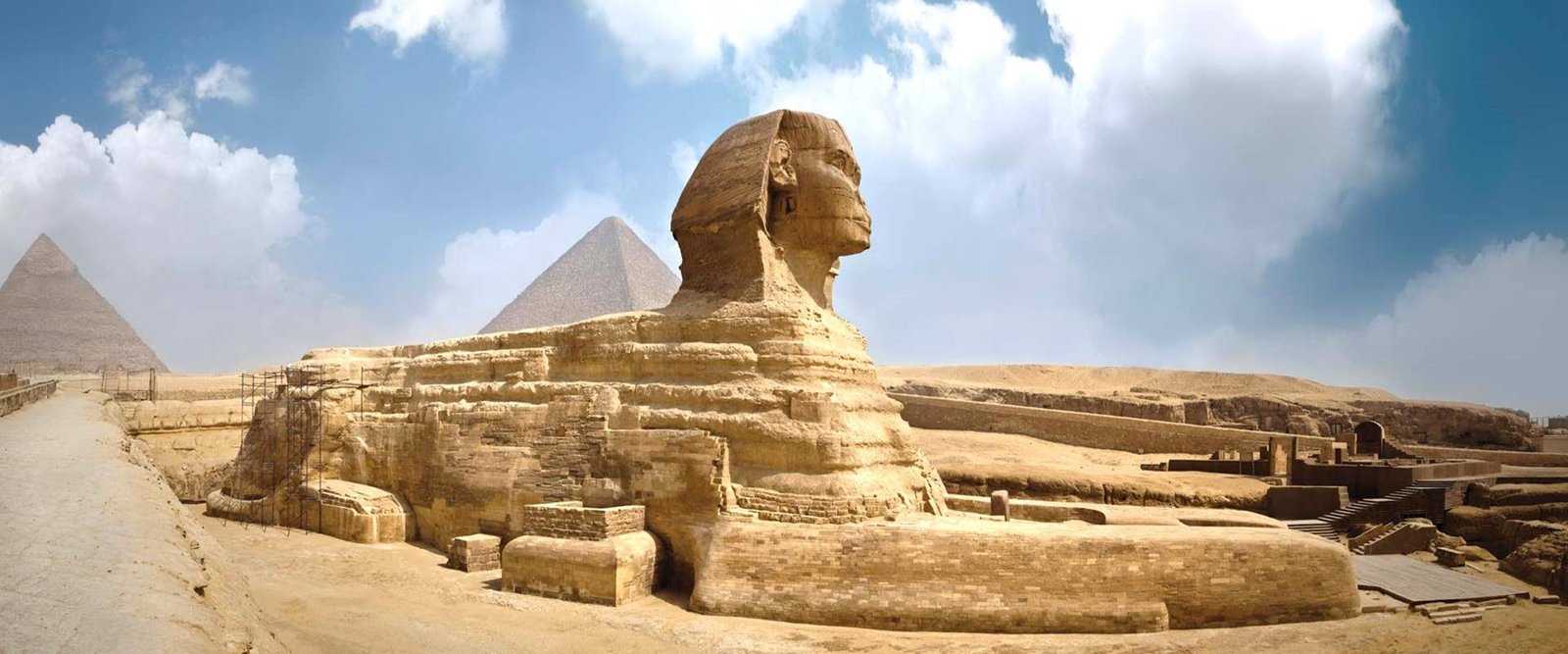
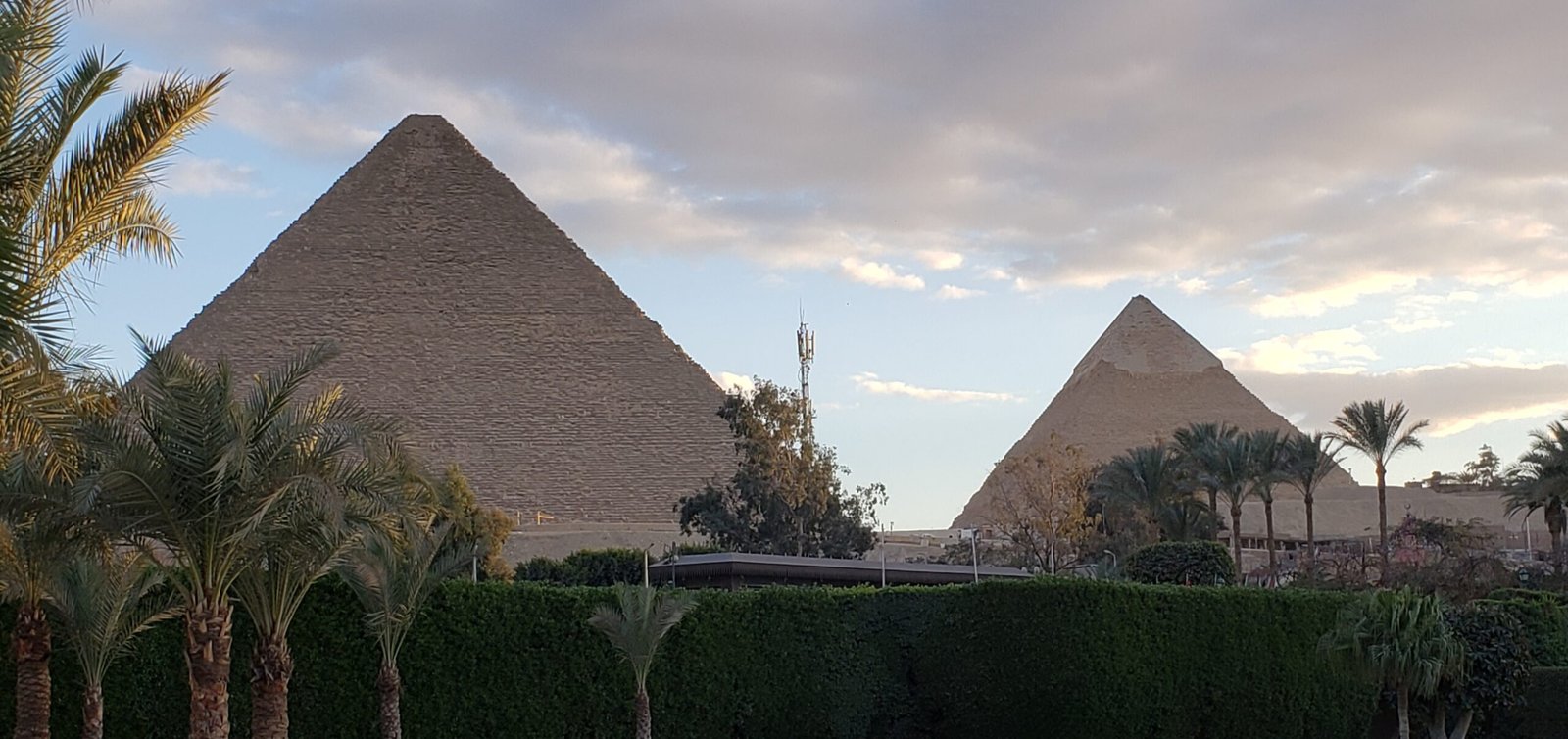
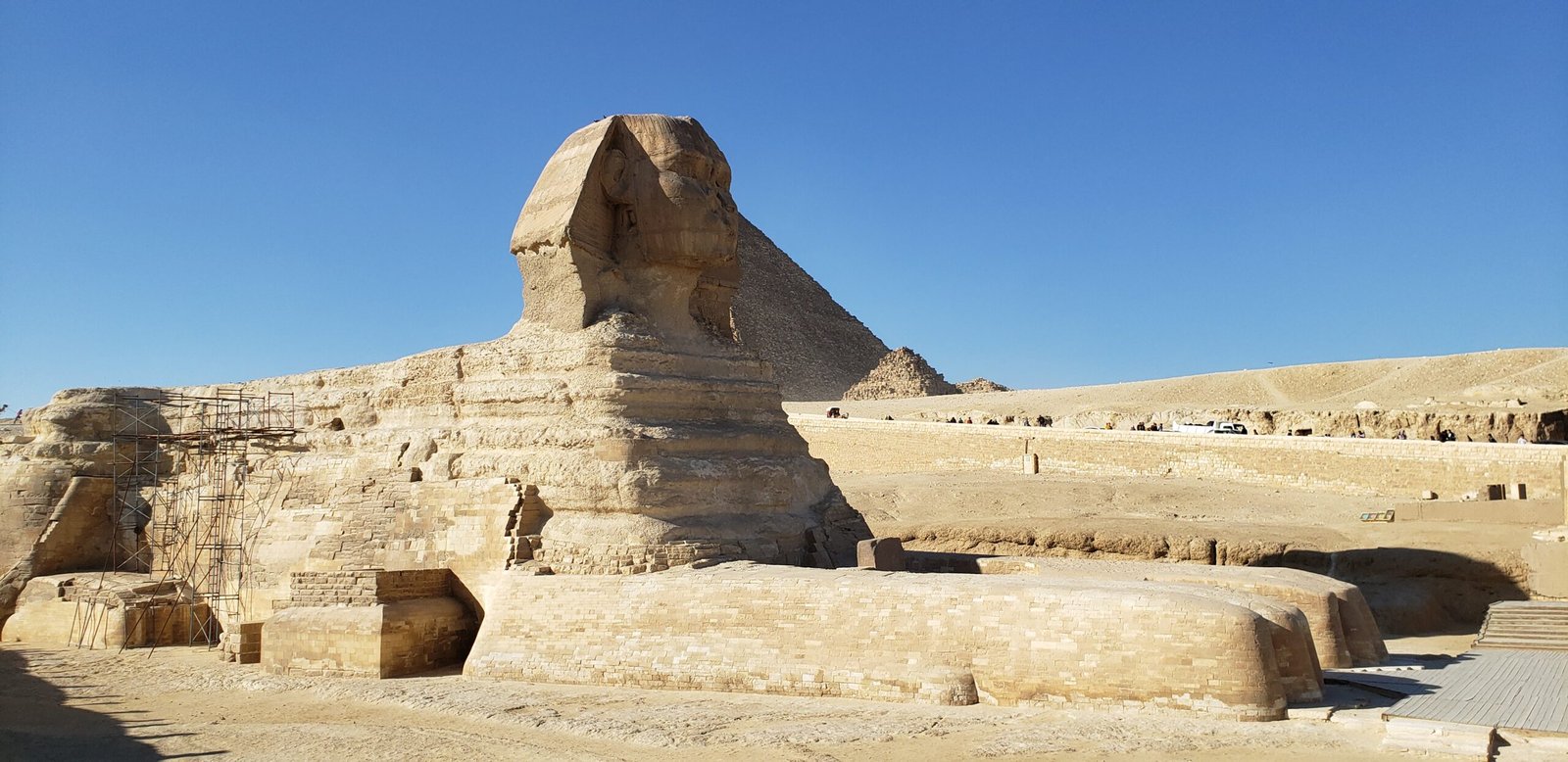
Egypt is the cradle of a deep-rooted civilization whose history goes back to more than five thousand years. It is the museum of history and the melting pot of the greatest civilizations throughout the ages. On its land the Pharaonic, Greek, Roman, Christian and Islamic Civilizations flourished. Every inch on its land tells a tale or a legend and leaves a riddle that perplexes scientists and thinkers throughout time. On its land there lie treasures which reveal everyday one letter of the alphabet of civilization and mysteries of human miracles in all fields such as mummification and astronomy. In its land arts grew, sciences flourished and holy religions found a safe haven away from persecution, and received a warm embrace of monotheism until they took root and blessed the world with the light of faith.
Ahlan wa sahlan! (Welcome in Arabic). Welcome to Egypt, the birth of civilization. Upon de-boarding, walk to a row of banks (windows), give the attendant US $25 per person per visa and they will give each of you a stamp which you will put in your passport. There after walk to the immigration control. Exit customs and immigration then pick up your checked luggage and look for a Tourcan Vacations representative who will be holding a paging board with your name & a Tourcan Vacations logo on it.
You are assisted with your luggage then transferred to the hotel.
Overnight: Steigenberger Tahrir or Similar
Breakfast at the hotel. Today you will be picked up to visit the Giza Pyramid Complex.
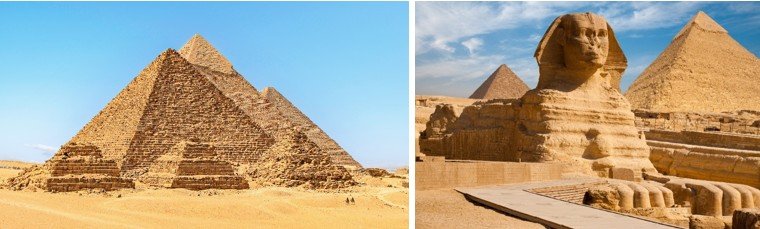
It a site on the Giza Plateau in Greater Cairo, Egypt that includes the Great Pyramid of Giza, the Pyramid of Khafre, and the Pyramid of Menkaure, along with their associated pyramid complexes and the Great Sphinx of Giza. All were built during the Fourth Dynasty of the Old Kingdom of Ancient Egypt, between 2600 and 2500 BC. The site also includes several cemeteries and the remains of a workers village.
The site is at the edges of the Western Desert, approximately 9 kilometers west of the Nile River in the city of Giza, and about 13 kilometers southwest of the city center of Cairo. Along with nearby Memphis, the site was inscribed on the UNESCO World Heritage List in 1979.The Great Pyramid and the Pyramid of Khafre are the largest pyramids built in ancient Egypt, and they have historically been common as emblems of Ancient Egypt in the Western imagination. They were popularized in Hellenistic times, when the Great Pyramid was listed by Antipater of Sidon as one of the Seven Wonders of the World. It is by far the oldest of the Ancient Wonders and the only one still in existence.
After the pyramids, enjoy lunch at a local restaurant.
This afternoon visit The Grand Egyptian Museum (GEM): also known as the Giza Museum, is an archaeological museum currently under construction in Giza, Egypt. When inaugurated, the GEM will be the largest archaeological museum in the world. It will house artifacts of ancient Egypt, including the complete Tutankhamun collection with many pieces will be displayed for the first time.
The building is shaped like a chamfered triangle. It sits on a site 2 kilometers (1.2 miles) west of the pyramids, and the building's north and south walls line up directly with the Great Pyramid of Khufu and the Pyramid of Menkaure. The museum will also be an international centre of communication between museums, to promote direct contact with other local and international museums.
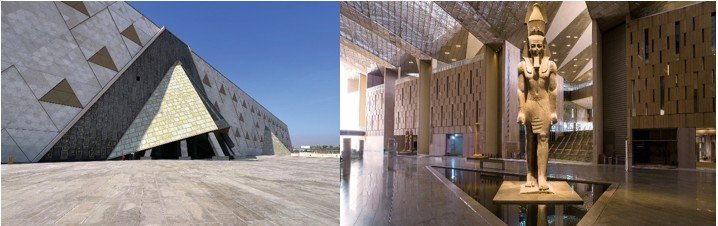
Return to the hotel.
Overnight: Steigenberger Tahrir or Similar
Meals: Breakfast & Lunch
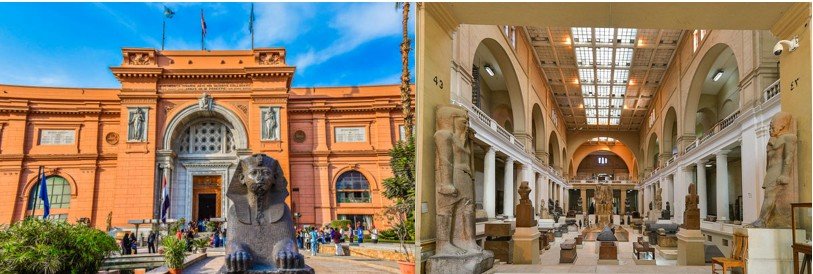
This morning after breakfast we shall depart the hotel and start our day with a fascinating tour of 7,000 years of Egyptian history with a visit to the Egyptian Museum of Antiquities. The Museum is located at Al-Tahrir Square in the heart of Cairo. It houses about 250,000 antique pieces covering the whole history of ancient Egypt, which extends over the past five thousand years. The exhibits of this museum are famous for their historical and artistic value.
Drive to Old Cairo, viewing along the way the city of the Dead, visit the beautiful and graceful Mohamed Ali Mosque and the ancient Citadel, a spectacular medieval fortress perched on a hill above the city. Originally built by Salah El-Din in 1176 to fortify the city against the Crusaders, the Citadel was modified and enlarged over the centuries by subsequent rulers and today is a complex of three mosques and four museums.
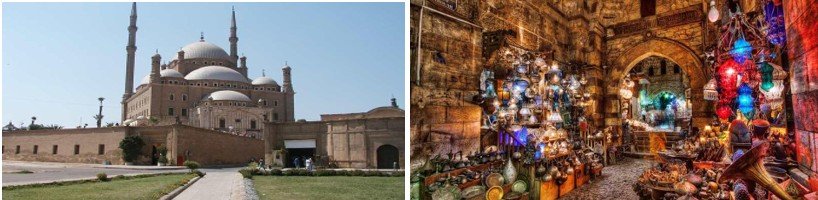
Our last stop is at the awesome Khan El-Khalili Bazaar, one of the earliest and greatest markets in the Middle East. Built in the 14th Century A.D. and contains many stores that exhibit wonderful collections of Jewelry, wooden products engrafted with mother of pearl, leather ware, embroidered dresses and attractive hand-made products that make a great selection of souvenirs.
Return to the hotel after the tour.
Overnight: Steigenberger Tahrir or Similar
Meals: Breakfast & Lunch
Checking out of the hotel and you will be transferred to the airport for your flight to Luxor.
On arrival, you will be met at the airport by another of our transfer representatives then transferred to the airport to board your Nile Cruise Boat, sailing from Luxor to Aswan for 4 nights visiting various stops along the Nile.
Note: Sightseeing on the Nile cruise is shared with other cruise guests and operated by the cruise Egyptologist guides.
Cruise itinerary is subject to change and any changes will be advised locally.
Wear good sturdy shoes for the excursions and dress in layers as it often gets very warm during the day.
Be wary of the temple keepers asking to take your picture as they will need a tip (Baksheesh).
11:00 Embarkation before lunch
13:00 Lunch on board
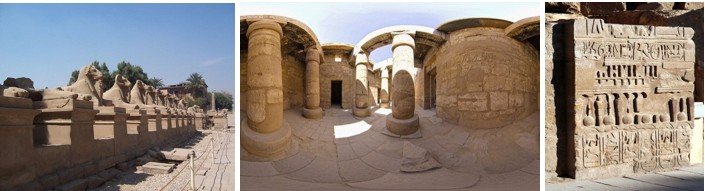
14:30 Visit Karnak Temple and Luxor Temple
The Temple of Karnak, comprises a vast mix of decayed temples, chapels, pylons, and other buildings. Building at the complex began in the reign of Sesostris I in the Middle Kingdom and continued into the Ptolemaic period, although most of the extant buildings date from the New Kingdom. The area around Karnak was the ancient Egyptian Ipet-isut ("The Most Selected of Places") and the main place of worship of the eighteenth dynasty Theban Triad with the god Amun as its head. It is part of the monumental city of Thebes. The Karnak complex takes its name from the nearby, and partly surrounded, modern village of el-Karnak, some 2.5 km north of Luxor.
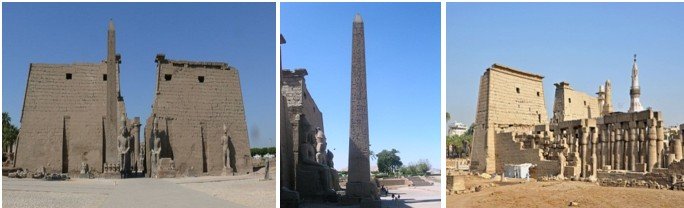
You will then be taken around the strikingly graceful Temple of Luxor dedicated to the god Amun. Unlike Karnak, Luxor is a large Ancient Egyptian temple complex located on the east bank of the Nile River in the city today known as Luxor (ancient Thebes) and was founded in 1400 BCE. For centuries Thebes was once known as the capital of the known world. It is known in the Egyptian language as ipet resyt, or "the southern sanctuary." In Luxor there are six great temples, the four on the left bank are known to travellers and readers of travels as Goornah, Deir-el-Bahri, the Ramesseum, and Medinet Habu; and the two temples on the right bank are known as the Karnak and Luxor. To the rear of the temple are chapels built by Tuthmosis III, and Alexander. During the Roman era, the temple and its surroundings were a legionary fortress and the home of the Roman government in the area.
17:30 Afternoon Tea
19:30 Belly Dance Show
20:00 Dinner on board
21:30 Enjoy music in the lounge
Optional (Supplement cost): Sound and Light show at Karnak temple
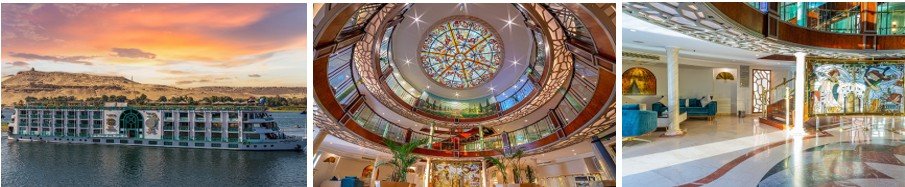
Overnight: Sonesta Moon Goddess Nile Cruise or Similar
Meals: Breakfast, Lunch & Dinner
Sonesta Moon Goddess Nile Cruise Ship offers 49 luxurious cabins with sliding glass doors opening to private balconies and 4 presidential suites with a private lounge. All accommodations feature their own private balcony. Sonesta Moon Goddess docks in front of Luxor Temple, before Luxor Bridge and docks in Aswan at Nile Dream Dock (in front of Aswan Sport Club).
06:00 Wake-up call
06:00 Breakfast on board
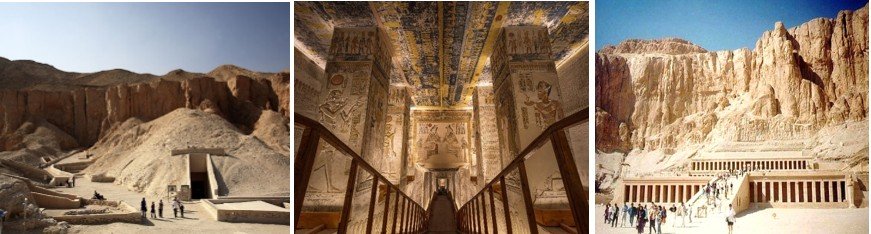
07:00 Visit West Bank (Valley of the Kings & Queens, Hatshepsut)
Note: Your entrance fee includes visits to 3 regular tombs, however there are premier tombs that hava a supplementary fee. You can purchase these tickets at the entry gate.
Personal recommendation: Visit tombs of Tutankhamun (Only tomb with a mummy inside) & Seti I (has the most impressive original colors. Lots of steps to go in but worth it). Should you wish to visit these, start with them incase you tire quickly you would have seen the highlights.
Begin the day with a visit to the legendary Valley of the Kings, the burial site of the pharaohs between the 18th and 20th ancient Egyptian dynasties and the famous site of the tomb of Tutankhamun. After exploring the valley, head to the Temple of Queen Hatshepsut, set on large terraces beneath the cliffs at Deir el-Bahari. Continue to the Colossi of Memnon, two imposing stone statues of the Pharaoh Amenhotep III, before returning to the ship.
12:30 Sail to Esna
13:00 Lunch on board
17:30 Afternoon Tea
19:30 Captain's Welcome Cocktail Party
20:00 Dinner on board
21:30 Enjoy music in the lounge
Overnight: Sonesta Moon Goddess Nile Cruise or Similar
Meals: Breakfast, Lunch & Dinner
03:30 Sail to Edfu
07:00 Wake-up call
07:30 Breakfast on board
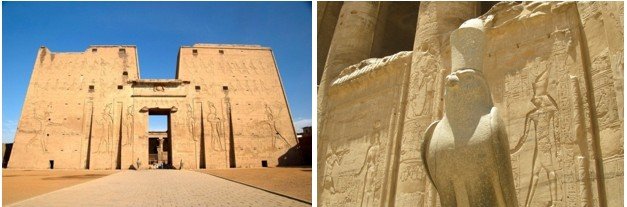
08:30 Visit Edfu Temple
Dedicated to the falcon headed god; Edfu (Horus) temple was built during the reigns of six Ptolemies. We have a great deal of information about its construction from reliefs on outer areas. It was begun in 237 BC by Ptolemy III Euergetes I and was finished in 57 BC. Most of the work continued throughout this period with a brief interlude of 20 years while there was unrest during the period of Ptolemy IV and Ptolemy V Epiphanes. This is not only the best preserved ancient temple in Egypt, but the second largest after Karnak. It was believed that the temple was built on the site of the great battle between Horus and Seth. Hence, the current temple was but the last in a long series of temples build on this location. It is said that the original structure housing a statue of Horus was a grass hut built in prehistoric times.
10:30 Sail to Kom Ombo
13:00 Lunch on board
17:00 Afternoon Tea
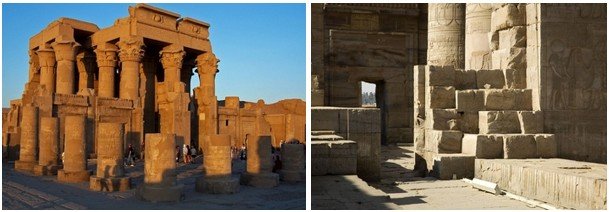
17:30 Visit Kom Ombo Temple
Dating from 180BC, this is an unusual temple because it is duplicated, mirroring itself on either side of a central axis. This is because it was dedicated to two gods: Sobek, god of fertility and creator of the world along with Hathor and Khonsu, and also Horus, and each needed their own set of rooms. Sobek was the crocodile god so, of course, crocodiles were mummified for him. Some of the hundreds that have been discovered nearby are now on display in the temple.
Time, the Nile River, earthquakes and later builders taking the stone for other buildings, have all taken a toll on this building. The surrounding town of Kom Ombo is now home to many of the Nubians displaced by the flooding to make Lake Nasser. Return to the boat.
20:00 Dinner on Board
21:30 Galabeya Party (You are encouraged to purchase and wear Egyptian outfits and wear the local Galabeya). During such parties, some games are conducted; the tour guides on board run the party, so join in the fun.
Overnight: Sonesta Moon Goddess Nile Cruise or Similar
Meals: Breakfast, Lunch & Dinner
03:30 Sail to Aswan
07:00 Wake-up call
07:30 Breakfast on board
08:30 Visit the High Dam, the Granite Quarries and the Temple of Philae
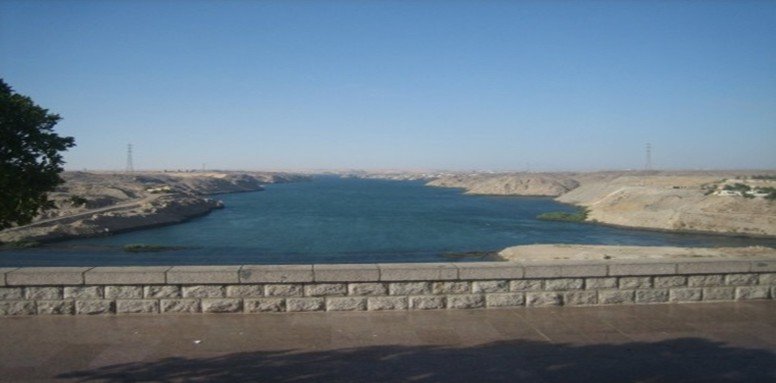
The Aswan Dam, or more specifically since the 1960s, it is the world's largest embankment dam, which was built across the Nile in Aswan, Egypt, between 1960 and 1970. Its significance largely eclipsed the previous Aswan Low Dam initially completed in 1902 downstream. Based on the success of the Low Dam, then at its maximum utilization, construction of the High Dam became a key objective of the government following the Egyptian Revolution of 1952; with its ability to better control flooding, provide increased water storage for irrigation and generate hydroelectricity, the dam was seen as pivotal to Egypt's planned industrialization. Like the earlier implementation, the High Dam has had a significant effect on the economy and culture of Egypt.
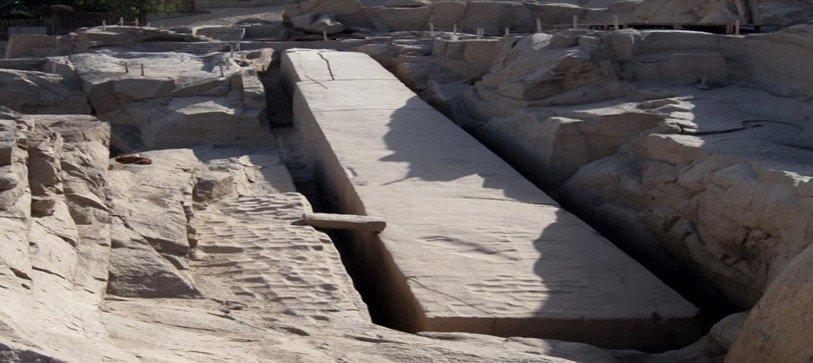
The Unfinished Obelisk creation was ordered by Hatshepsut (1508–1458 BC), possibly to complement what would later be known as the Lateran Obelisk (which was originally at Karnak, and was later brought to the Lateran Palace in Rome). The unfinished obelisk is nearly one-third larger than any ancient Egyptian obelisk ever erected. If finished it would have measured around 42 meters (138 ft) and would have weighed nearly 1,090 tons (1,200 short tons), a weight equal to about 200 African elephants. The obelisk's creators began to carve it directly out of bedrock, but cracks appeared in the granite and the project was abandoned. The bottom side of the obelisk is still attached to the bedrock. The unfinished obelisk offers unusual insights into ancient Egyptian stone-working techniques, with marks from workers' tools still clearly visible as well as ochre-colored lines marking where they were working. Besides the unfinished obelisk, an unfinished, partly worked obelisk base was discovered in 2005 at the quarries of Aswan. Also discovered were some rock carvings and remains that November correspond to the site where most of the famous obelisks were worked. All these quarries in Aswan and the unfinished objects are an open-air museum and are officially protected by the Egyptian government as an archeological site.
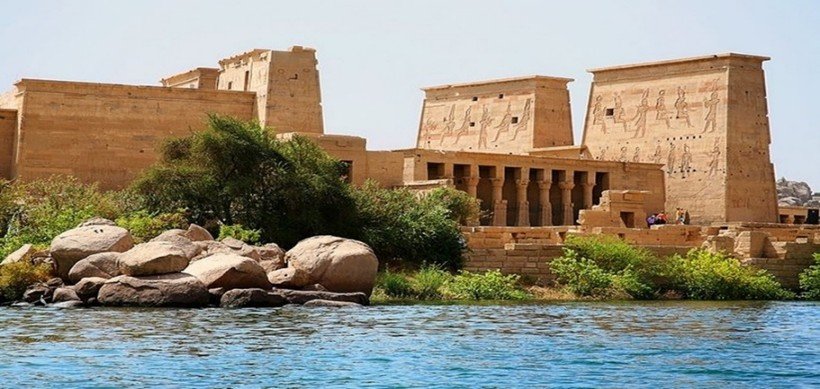
The Philae Temple
Note: The captain of the boat often displays souvieniers, for purchase, made by the Nubian community. These are often necklaces, braclets, keychains, etc.
This beautiful temple complex is one of the most picturesque in all of Egypt. It sits on Aglika Island just south of the old Aswan Dam and you must ride a water taxi to the island to get to the ruins. The temple was moved to its current location following the construction of the High Dam, which threatened to submerge it permanently. The careful reconstruction at the current site carefully completed, painstakingly preserving the original appearance and layout of the complex and even landscaping the island to match its former location. Philae rose to prominence during the Ptolomaic Dynasty as the center of the cult of the goddess Isis. This complex was actually one of the last remaining places where the ancient religion survived after the arrival of Christianity in Egypt, officially closing only in 550 AD. Early Christians then used the main temple on the island as a church. This is the reason for the defacement of some of the figures of the ancient gods as these Christians often tried to remove the pagan imagery from their newly claimed sanctuaries. The Temple of Isis is the main feature here, but there are several other smaller temples on the island that are worth spending time admiring.
13:00 Lunch on board
15:30 Sail on the Nile by Felucca around Kitchener's Island & Agha Khan
17:30 Afternoon Tea
19:30 Nubian Folkloric Show
20:00 Dinner on Board
21:30 Enjoy music in the lounge
Important note: The order of the optional excursions November vary depending on your departure day.
Overnight: Sonesta Moon Goddess Nile Cruise or Similar
Meals: Breakfast, Lunch & Dinner
Optional (supplement cost): Abu Simbel tour with return flights from Aswan
07:00 Wake-up call
07:00 Breakfast on board
08:00 Settle your cruise incidentials, disembark and you are transferred to Aswan airport to check in then board the flight back to Cairo.
On arrival and after baggage collection, you are met by another of our representatives then taken to visit the National Museum of Egyptian Civilization, the first of its kind in Egypt and the Arab world. It presents the full range of the richness and diversity of Egyptian civilization throughout the ages, from prehistoric times to the present day by focusing on its continuity and stability as demonstrated by its tangible and intangible heritage. The museum’s exceptional collection includes the royal mummies, which are exhibited in a new interactive display using 21st century cutting-edge technology to go beneath the wrappings and reveal their secrets, in addition to shedding light on the rituals and religious beliefs surrounding mummification in ancient Egypt.
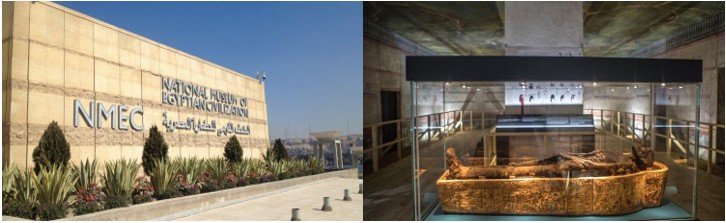
After the tour, you will be transferred to the hotel for check-in.
Overnight: Steigenberger Tahrir or Similar
Meal: Breakfast
Check out of hotel and you are driven to Alexandria via the desert road.
Known widely as the "Pearl of the Mediterranean", Alexandria is Egypt's second largest city and center of industry. Greek warrior Alexander the Great ruled Egypt from his base in the coastal and cosmopolitan city in the fourth century BC, making Alexandria the capital of Graeco-Roman Egypt. Alexandria became the intellectual hub of the ancient world, enticing historians, philosophers and mathematicians to its famous seaside library: the “Bibliotheca Alexandrina“. Alexandria is also home to the Pharos Lighthouse - one of the Seven Wonders of the Ancient World. Largely because of its unique cosmopolitan roots, Alexandria differs widely from the rest of the country, especially Cairo.
On arrival check into the hotel and start your tour.
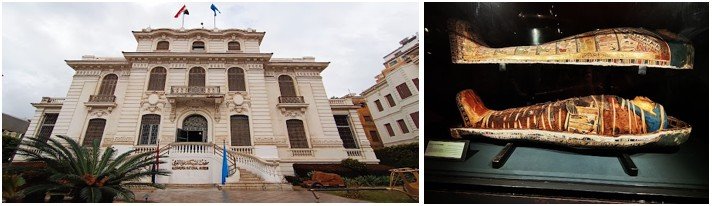
Start today’s tour at the Alexandria National Museum: The museum comprises more than 1800 archaeological pieces that narrate the Pharaonic, Greek, Roman, Coptic, Islamic, and modern history of Egypt. One display features pieces picked up from the seabed at Abu Kir Bay and the eastern harbor near the Qaitbay Citadel. The Alexandria Museum is number 27 in the series of historic and archaeological museums across Egypt.
Visit the Catacombs of Kom el Shoqafa; the necropolis of 3 sub-levels dating from the 2nd century AD merges aspects of Egyptian, Greek, and Roman culture in its features. See the Roman triclinium – a banquet hall to honor the dead, as well as statues, reliefs, and a pillared lobby featuring depictions of Egyptian gods in Roman armor.
Stop by the Pompeii's Pillar; this is a granite pillar, over 25 meters high, and built amidst the ruins of the Serapium in 297 A.D., in honor of Emperor Diocletian; the Fort of Qait Bay.
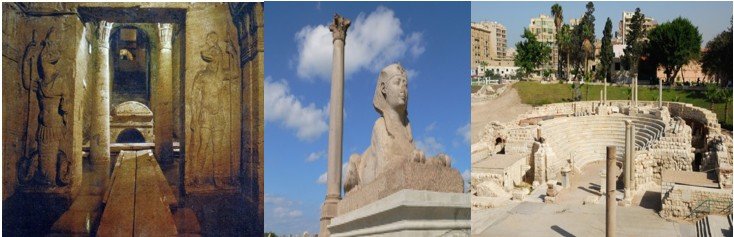
End today’s tour with a visit of the Roman amphitheatre. The Roman theatre we see today at Alexandria city is a typical form Roman theatre, consisting of audience section made of marble, granite columns, five compartments and based on thick limestone walls. The theatre used to host huge ceremonies and events with a capacity of 600 spectators. The audience section consisted of 13 rows made of white marble and the supported columns were made of granite exported from Aswan city south Egypt. The five compartments on the top of the audience section probably were used to host some royals or public figures during performances, and was covered by ceilings in the shape of domes supported by granite columns to protect the audience from the sun and rain. In the 6th century A.D, an earthquake hit Alexandria and destroyed most of these structures leaving only some ruins that still stands until today, reflecting the beautiful and magnificent architectural skills that Romans had.
After lunch, proceed to visit the Montazah Palace and Gardens: This 114-acre complex belonged to the family of Mohamed Ali, which ruled Egypt from the mid-19th century until 1952. It is surrounded by great walls from the south, east, and west, a beach to the north. The complex is adorned with beautiful gardens and palm trees, making it an ideal stop in Alexandria. This area used to belong to the Mohamed Ali family that ruled Egypt from the mid-19th century until 1952. The construction was started in 1892 by King Abbas II, who built a large palace inside the complex called the Salamlek. In 1932, King Fuad built a larger palace and called it the Haramlik. His son, King Farouk, built a bridge to the sea to act as a waterfront. The rest of the 115 acres is nothing but beautiful gardens. Palm trees and gazelles cover the area. This is a wonderful spot to enjoy the beauty of Alexandria.
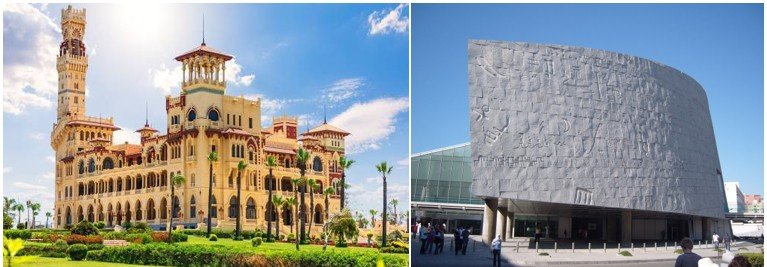
End the day with a visit of Alexandria Library: Shaped like a massive, partly hidden, tilted disc rising up from the Mediterranean, the Bibliotheca Alexandrina evokes the image of a rising sun, a source of light and enlightenment. Bibliotheca was inaugurated in 2002 as a resurrection of the ancient Great Library of Alexandria, which had formed the cornerstone of ancient intellectual life. Aside from a library displaying books on 7 levels that form a “pyramid of knowledge,” the cultural complex also includes other specialized libraries, museums, exhibition areas, education centers, and an international conference center.
Continue to the hotel and check-in.
Accommodation at Steigenberger Cecil hotel or Similar
Meal: Breakfast
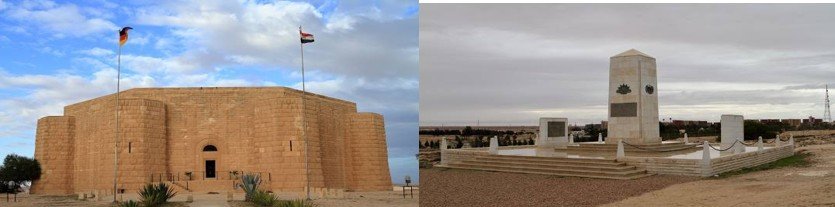
Breakfast in the hotel and departure along the coast towards El Alamein, Fought near the western frontier of Egypt between 23 November and 4 November 1942, El Alamein was the climax and turning point of the North African campaign in the Second World War, here the German and Italy armies suffered a decisive defeat abandoning Tanks , vehicles , weapons and even uniforms that are collected in this unique museum. After visiting the Museum we will return to the hotel.
Accommodation at Steigenberger Cecil hotel or Similar
Meal: Breakfast
Check out of the hotel after breakfast.
This afternoon start the return journey to Cairo and our services end as you are dropped off at the airport to check in for your homebound flight.
Meal: Breakfast
Bon Voyage…!
*** End of our services***
IMPORTANT INFORMATION:
- Your passport must be valid for at least 6 months after your return.
- You need a visa to enter Egypt.
- Please note that the itinerary is subject to change due to traffic conditions, weather, etc. However the guides will always notify you of any changes.
- Tipping is customary and expected in Egypt. The standard will be as follows:
| RATE IN USD PER PERSON | |||
| Transfer representative | $2 | Transfer Driver | $2 |
| Full day tour | $12 | Half day tour | $8 |
| Hotel Porters in /out (per transfer) | $1 | Porter at airport | $1 |
| Motor Boat in Philae | $1 | Felucca Ride | $1 |
| Cruise Staff Per day | $5 | Cruise guide per day | $8 |
| Horse Carriage | $2 | Bathroom stop | $1 |