

Ahlan wa sahlan! (Welcome in Arabic). Welcome to Egypt, the birth of civilization. After safely Landing at Cairo International Airport, clear customs and immigration then collect your checked luggage.
You are then transferred in a private air-conditioned vehicle to your hotel where you are assisted with a smooth check-in.
Details of your sightseeing times and tour will also be made available. Remainder of the day at leisure at your hotel.
Overnight: Marriott Mena House - Premium Pyramids view with terrace or Similar
After breakfast, meet your guide, who will accompany you on today’s tour, in the hotel lobby.
Start off with a visit to the Giza Pyramid Complex, also called the Giza Necropolis.
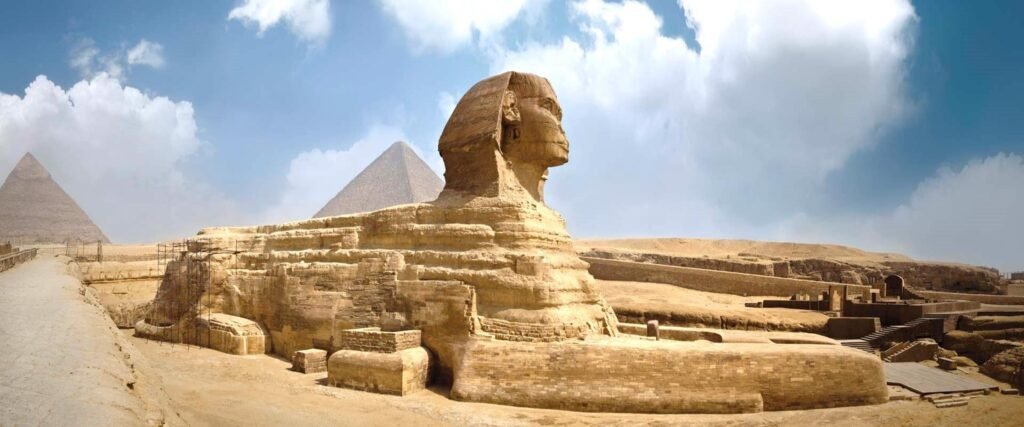
It a site on the Giza Plateau in Greater Cairo, Egypt that includes the Great Pyramid of Giza, the Pyramid of Khafre, and the Pyramid of Menkaure, along with their associated pyramid complexes and the Great Sphinx of Giza. All were built during the Fourth Dynasty of the Old Kingdom of Ancient Egypt, between 2600 and 2500 BC. The site also includes several cemeteries and the remains of a workers village. The site is at the edges of the Western Desert, approximately 9 kilometers west of the Nile River in the city of Giza, and about 13 kilometers southwest of the city center of Cairo. Along with nearby Memphis, the site was inscribed on the UNESCO World Heritage List in 1979.The Great Pyramid and the Pyramid of Khafre are the largest pyramids built in ancient Egypt, and they have historically been common as emblems of Ancient Egypt in the Western imagination. They were popularized in Hellenistic times, when the Great Pyramid was listed by Antipater of Sidon as one of the Seven Wonders of the World. It is by far the oldest of the Ancient Wonders and the only one still in existence.
Enjoy lunch at a local restaurant then proceed to visit Memphis or Men-nefer which was the ancient capital of Inebu-hedj, the first name of Lower Egypt that was known as mḥw ("north"). Its ruins are located near the modern town of Mit Rahina , 20 km south of Giza in Greater Cairo, Egypt. According to legends related in the early third century BC by Manetho, a priest and historian who lived in the Ptolemaic Kingdom during the Hellenistic period of ancient Egypt, the city was founded by King Menes. It was the capital of ancient Egypt (Kemet or Kumat) during the Old Kingdom and remained an important city throughout ancient Egyptian history It occupied a strategic position at the mouth of the Nile Delta, and was home to bustling activity. Its principal port, Peru-nefer (not to be confused with Peru-nefer at Avaris), featured a high density of workshops, factories, and warehouses that distributed food and merchandise throughout the ancient kingdom. During its golden age, Memphis thrived as a regional centre for commerce, trade, and religion. Memphis was believed to be under the protection of the god Ptah, the patron of craftsmen. Its great temple, Hut-ka-Ptah (meaning "Enclosure of the ka of Ptah"), was one of the most prominent structures in the city. The name of this temple, rendered in Greek as Aἴγυπτoς (Ai-gy-ptos) by Manetho, is believed to be the etymological origin of the modern English name Egypt. The history of Memphis is closely linked to that of the country itself. Its eventual downfall is believed to have been due to the loss of its economic significance in late antiquity, following the rise of coastal Alexandria. Its religious significance was diminished after the abandonment of the ancient religion following the Edict of Thessalonica (380 AD), which made Nicene Christianity the sole religion of the Roman empire. Today, the ruins of the former capital offer fragmented evidence of its past. Along with the pyramid complex at Giza, they have been preserved as a World Heritage Site since 1979. The site is open to the public as an open-air museum.
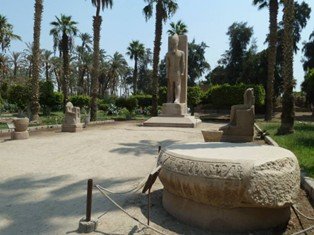
Continue to Saqqara Egyptian Arabic pronunciation, also spelled Sakkara or Saccara in English is an Egyptian village in Giza Governorate, that contains ancient burial grounds of Egyptian royalty, serving as the necropolis for the ancient Egyptian capital, Memphis.
Saqqara contains numerous pyramids, including the Step pyramid of Djoser, sometimes referred to as the Step Tomb, and a number of mastaba tombs. Located some 30 km (19 mi) south of modern-day Cairo, Saqqara covers an area of around 7 by 1.5 km (4.3 by 0.9 mi).
Saqqara contains the oldest complete stone building complex known in history, the Pyramid of Djoser, built during the Third Dynasty. Another sixteen Egyptian kings-built pyramids at Saqqara, which are now in various states of preservation. High officials added private funeral monuments to this necropolis during the entire Pharaonic period. It remained an important complex for non-royal burials and cult ceremonies for more than 3,000 years, well into Ptolemaic and Roman times.
North of the area known as Saqqara lies Abusir and south lies Dahshur. The area running from Giza to Dahshur has been used as a necropolis by the inhabitants of Memphis at different times, and it was designated as a World Heritage Site by UNESCO in 1979. Some scholars believe that the name Saqqara is not derived from the ancient Egyptian funerary deity, Sokar, but from a local Berber tribe called Beni Saqqara.
Return to the hotel after your tour.
Overnight: Marriott Mena House - Premium Pyramids view with terrace or Similar
Meal: Breakfast & Lunch
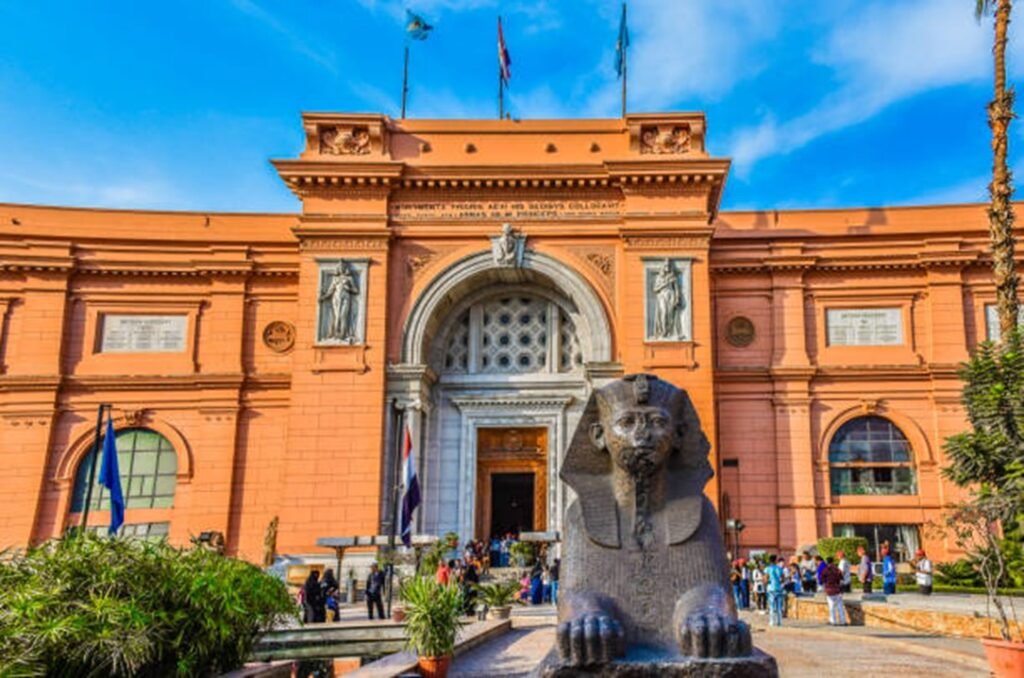
This morning after breakfast we shall start our day with a fascinating tour of 7,000 years of Egyptian history with a visit to the Egyptian Museum of Antiquities. The Museum is located at Al-Tahrir Square in the heart of Cairo. It houses about 250,000 antique pieces covering the whole history of ancient Egypt, which extends over the past five thousand years. The exhibits of this museum are famous for their historical and artistic value.
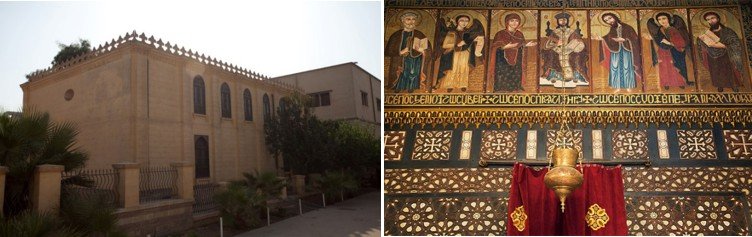
Drive to Old Cairo, viewing along the way the city of the Dead, visit the Ben Ezra Synagogue and the Hanging Church (al-Mu'allaqua): Originating in the 4th century, the hanging Church was built over the southern gate of the fortress of Babylon. Dedicated to the Virgin Mary, its treasures include a 14th-century wall painting of the Nativity.
After lunch we are off to the fascinating part of Islamic Cairo, including the beautiful and graceful Mohamed Ali Mosque and the ancient Citadel, a spectacular medieval fortress perched on a hill above the city.
Originally built by Salah El-Din in 1176 to fortify the city against the Crusaders, the Citadel was modified and enlarged over the centuries by subsequent rulers and today is a complex of three mosques and four museums.
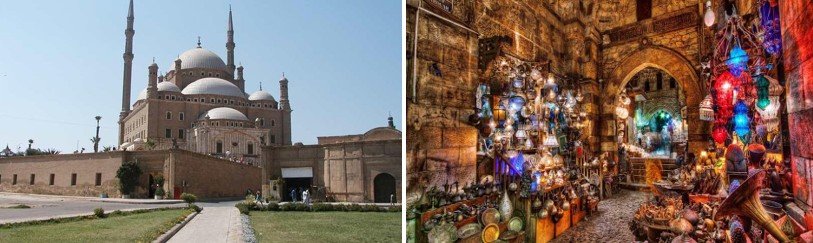
Our last stop is at the awesome Khan El-Khalili Bazaar, one of the earliest and greatest markets in the Middle East. Built in the 14th Century A.D. and contains many stores that exhibit wonderful collections of Jewelry, wooden products engrafted with mother of pearl, leather ware, embroidered dresses and attractive hand-made products that make a great selection of souvenirs.
Return to the hotel for much needed rest.
Overnight: Marriott Mena House - Premium Pyramids view with terrace or Similar
Meal: Breakfast & Lunch
Check out of the hotel after breakfast. You will be met and transferred to Cairo airport to check in then fly to Abu Simbel vis Aswan. On arrival at Abu Simbel airport, you will be met by your local guide, board the bus and travel to the temples. Start your visit of the temple of King Ramses II and his wife Nifertari.
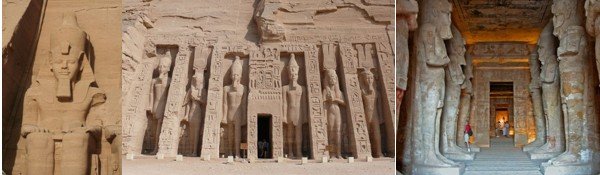
These two temples attracted worldwide attention when they were threatened by inundation by the waters of the High Dam. In response to an appeal by the Arab Republic of Egypt, UNESCO, in 1959, initiated an international donations campaign to save the monuments of Nubia, the relics of the oldest human civilization. The salvage of the Abu Simbel temples began in 1963 and cost some 36 million dollars. Once again, the Abu Simbel temples were relocated on the plateau to greet the sunrise every morning.
The Greater Abu Simbel Temple (Ramses II) - This is one of the many relics erected by the Pharaoh Ramses II, this is the grandest and most beautiful of temples.
The facade is 33 meters high, 38 meters broad, and guarded by four statues of Ramses II, each of which is 20 meters high. High on the facade, there is a carved row of baboons, smiling at the sunrise. On the doorway of the temple, there is a beautiful inscription of the king's name: Ser-Ma'at-Ra and between the legs of the colossal statues on the facade, we can see smaller statues of Ramses II's family: his mother "Mut-tuy", his wife "Nefertari" and his sons and daughters.
The Smaller Abu Simbel Temple (Nefertari) Located north of the Greater Temple, this was carved in the rock by Ramses II and dedicated to the goddess of Love and Beauty, Hathur, and to his favorite wife, Nefertari. The Facade is adorned by six statues, four to Ramses II and two to his wife Nefertari. The entrance leads to a hall containing six pillars bearing the head of the goddess, Hathur.
After the tour, board the bus back to Abu Simbel airport. Check in and board the flight back to Aswan.
You will be met and assisted at Aswan Airport by our local representative then transferred to the hotel to check in.
Spend the rest of the day at leisure.
Enjoy dinner at the hotel.
Overnight: Sofitel Legend Old Cataract Aswan or Similar
Meal: Breakfast
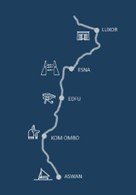
Check out of the hotel after breakfast and you are transferred to embark on your Nile River cruise sailing from Aswan to Luxor for 3 nights.
Welcome to the Sonesta Sun Goddess
Category: 5 Stars Deluxe
Year Built: 2020, launching February 2020
Guest Suites
All cabins feature:
- Private Terrace with sitting area
- Private, direct-dial telephone
- Hairdryer
- Safe
- Mini bar
- Music system
- Television
- Individual climate control
- Bathroom with full-size bathtub
- In-room dining available until midnight
All cabins and suites are non-smoking. Smoking is allowed only in open areas.
Facilities:
- Main Dining Room
- Lounge & discotheque
- Snack and Sundeck bars
- Jogging Track on sundeck
- Sundeck with barbecue facilities
- Meeting and Banquet facilities: Fully equipped available upon request
- Outdoor swimming pool with Jacuzzi
- Massage room
- Spa and Jacuzzi
- Bazaar
- Beauty Salon
- Laundry service
- One bottle of water daily free of charge
- Tea and coffee during meals and inside the restaurant free
- Tea and coffee tray inside the suite, refilled daily free
- Fruit basket upon arrival free
- Wireless internet access is available throughout the ship and in all suites free
- Doctor available on call against charge
- Elevator
Entertainment on board:
- Welcome fruit drink
- Discotheque
- Belly dance show
- Captain’s welcome cocktail party
- Fancy Galabya party
- Nubian Folkloric show
Embarkation before lunch
13:30|Visit the high dam, the granite quarries and the temple of Philae
This world-famous High dam was an engineering miracle when it was built in the 1960s. It contains 18 times the material used in the Great Pyramid of Cheops. The Dam is 11,811 feet long, 3215 feet thick at the base and 364 feet tall. Today it provides irrigation and electricity for the whole of Egypt and, together with the old Aswan Dam built by the British between 1898 and 1902`, 6km down river, wonderful views for visitors. From the top of the two Mile long High Dam you can gaze across Lake Nassar, the huge reservoir created when it was built, to Kalabsha temple in the south and the huge power station to the north. The High Dam created a 30% increase in the cultivatable land in Egypt and raised the water table for the Shara as far away as Algeria. The electricity producing capability of the Dam doubled Egypt's available supply.
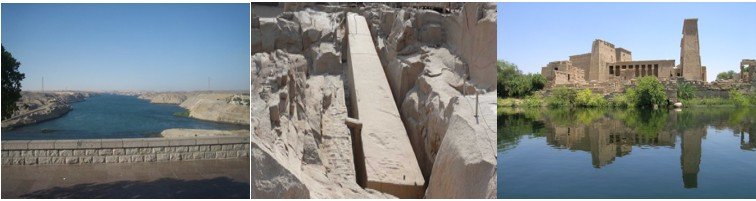
Then we go to see the ‘Unfinished Obelisk’ which still lays in the granite quarries which provided ancient Egypt with building materials. It would have been the largest piece of stone ever handled but when a crack was discovered it was abandoned where it was being hewn.
Cross by boat to Agilkia Island, to see the Temple of Isis at Philae Temple which is one of the Nubian Temples rescued before the High Dam was built. Enjoy Philae’s long colonnades, towers, and reliefs which include the last surviving hieroglyphic and demotic inscriptions in Egypt. Return to the boat after your morning visit.
17:00 | Afternoon tea
19:30 | Nubian folkloric show
20:00 | Dinner
Overnight in Aswan on board the Sun Goddess Cruise or SimilarMeals: Breakfast, Lunch &Dinner
05:00|Sailing to Kom Ombo
07:30|Wake-up call
07:00-08:30| Breakfast on board
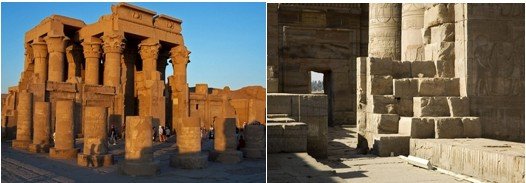
08:30|Visit Temple shared by two gods Sobek and Haeroris in Komombo
Dating from 180BC, this is an unusual temple because it is duplicated, mirroring itself on either side of a central axis. This is because it was dedicated to two gods: Sobek, god of fertility and creator of the world along with Hathor and Khonsu, and also Horus, and each needed their own set of rooms. Sobek was the crocodile god so, of course, crocodiles were mummified for him. Some of the hundreds that have been discovered nearby are now on display in the temple.
Time, the Nile River, earthquakes and later builders taking stones for other buildings, have all taken a toll on this building. The surrounding town of Kom Ombo is now home to many of the Nubians displaced by the flooding to make Lake Nasser. Return to the boat.
10:00|Sail to Edfu
13:00|Lunch on board
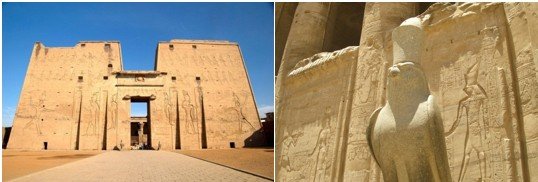
14:30| Visit Horus Temple in Edfu
Dedicated to the falcon headed God; Edfu (Horus) temple was built during the reigns of six Ptolemies. We have a great deal of information about its construction from reliefs on outer areas. It began in 237 BC by Ptolemy III Euergetes I and was finished in 57 BC. Most of the work continued throughout this period with a brief interlude of 20 years while there was unrest during the period of Ptolemy IV and Ptolemy V Epiphanes. This is not only the best-preserved ancient temple in Egypt, but the second largest after Karnak. It was believed that the temple was built on the site of the great battle between Horus and Seth. Hence, the current temple was but the last in a long series of temples built on this location. It is said that the original structure housing a statue of Horus was a grass hut built in prehistoric times.
16:30|Sail to Esna
16:30|Teatime
19:30|Dinner on board
21:30|Galabeya (costume) party Overnight in Esna on board the Sun Goddess Cruise or Similar
Meals: Breakfast, Lunch &Dinner
03:30|Sail to Luxor
07:00|Wakeup call
07:00|Breakfast on board
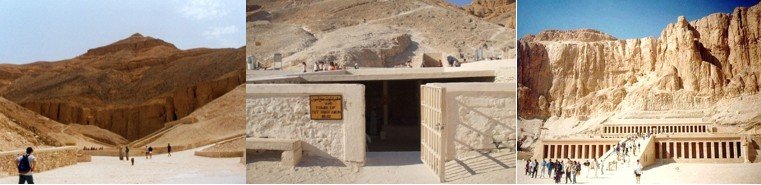
08:00|Visit the West Bank (Valley of Kings & Queens, Hatshepsut)
The great Valley of the Kings where generations of pharaohs & nobles were buried in splendid crypts cut into the cliffs.
You will also get to visit the tomb of the Eighteenth Dynasty king Tutankhamun (c.1336–1327 BC) which is world-famous because it is the only royal tomb from the Valley of the Kings that was discovered relatively intact. Its discovery in 1922 by Howard Carter made headlines worldwide and continued to do so as the golden artifacts and other luxurious objects discovered in this tomb were being brought out. The tomb and its treasures are iconic of Egypt, and the discovery of the tomb is still considered one of the most important archaeological discoveries to date.
You will also visit the temple of Queen Hatshepsut and the El Bahari and the Colossi Memnon.
Please note: At the temple of the Kings the premier tombs entrance fee is not included and is at a supplement cost. An example of these tombs are Ramses and his sons.
13:00|Lunch on board
14:30|Visit Karnak & Luxor Temples
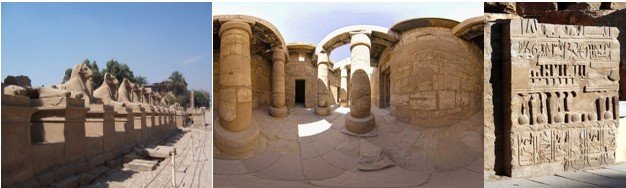
Visit East Bank (Karnak and Luxor Temples): You will proceed to the Temple of Karnak, comprises a vast mix of decayed temples, chapels, pylons, and other buildings. Building at the complex began in the reign of Sesostris I in the Middle Kingdom and continued into the Ptolemaic period, although most of the extant buildings date from the New Kingdom. The area around Karnak was the ancient Egyptian Ipet-isut ("The Most Selected of Places") and the main place of worship of the eighteenth dynasty Theban Triad with the god Amun as its head. It is part of the monumental city of Thebes. The Karnak complex takes its name from the nearby, and partly surrounded, modern village of el-Karnak, some 2.5 km north of Luxor.
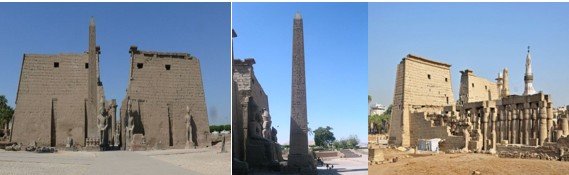
You will then be taken around the strikingly graceful Temple of Luxor dedicated to the god Amun. Unlike Karnak, Luxor is a large Ancient Egyptian temple complex located on the east bank of the Nile River in the city today known as Luxor (ancient Thebes) and was founded in 1400 BCE. For centuries Thebes was once known as the capital of the known world. It is known in the Egyptian language as ipet resyt, or "the southern sanctuary." In Luxor there are six great temples, the four on the left bank are known to travellers and readers of travels as Goornah, Deir-el-Bahri, the Ramesseum, and Medinet Habu; and the two temples on the right bank are known as the Karnak and Luxor. To the rear of the temple are chapels built by Tuthmosis III, and Alexander. During the Roman era, the temple and its surroundings were a legionary fortress and the home of the Roman government in the area.
17:00|Afternoon tea
19:30|Belly dance show
20:00|Dinner on board
22:00|Enjoy music in the lounge
Overnight in Luxor on board the Sun Goddess Cruise or SimilarMeals: Breakfast, Lunch &Dinner
07:00|Breakfast on board
08:00|Disembarkation & settle your cruise bill.
Meet your transfer representative in the cruise lobby then you are transferred from the cruise port to Luxor airport to check in then board the return flight to Cairo.
On arrival and after baggage collection, walk to the airport located hotel and check-in.
Spend the rest of the day at leisure.
Overnight: Le Meridien Airport hotel or Similar
Meal: Breakfast
Check out of the hotel after an early breakfast and walk to international departures to check in then board your flight to Amman, Jordan (airfare is extra).
Welcome to the Hashemite Kingdom of Jordan, a country with outstanding ancient history, biblical sites of importance and beautiful desert landscapes.
Upon arrival at Amman airport and before customs you will be met by our airport representative, who will be waiting to assist you with your entry visa, through immigration and on baggage claims. Your entry visa will have been arranged already, so please ensure you locate our representative (they will be holding a welcome sign with your name on it) before you reach the visa desks, otherwise you may have to pay to enter. Once you have cleared these areas and your luggage arrives, you are taken to the arrivals hall where you meet your driver and drive to your hotel.
On arrival check into the hotel.
Overnight at Amman Fairmont Hotel or Similar
Meal: Breakfast & Dinner
Breakfast in Amman Hotel then start your sightseeing.
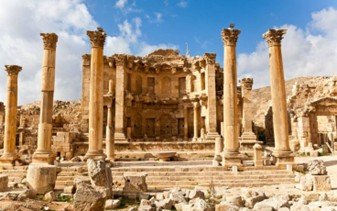
Jerash - “Pompeii of the East”, Gerasa one of the Decapolis “the Famous 10 Greco-Roman Cities” Located 45 KM north to Amman, Jerash is the best-preserved example of Roman Civilization in Jordan. The Major highlights: Arc de Triumph or Hadrian’s Arch, The Hippodrome, the oval square, the colonnaded street, the temple of Aphrodite, Temples of Artemis and Zeus and the Roman theater, The Nymphaeum, 14 Churches from early Christian-Byzantine era, some Umayyad and Mamluks settlements.
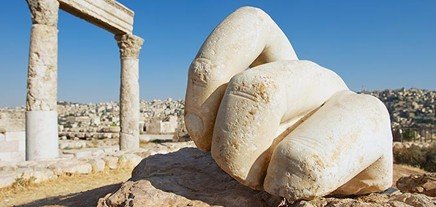
Enjoy lunch at a local restaurant then visit Amman City Tour the capital of Hashemite Kingdom of Jordan, which was founded 7000 years ago, the Human civilized occupation continued through the Greco-Roman era over Seven Mountains reaching nowadays over more than 20 mountains. The Major highlights of the city: Amman Citadel: where you can visit Amman Archaeological Museum, Hercules Temple, Byzantine Church & the Ummayad Palace. The Roman Amphitheater is in downtown next to the Folklore Museum.
Dinner is included at the hotel.
Overnight at Amman Fairmont Hotel or Similar
Meal: Breakfast, lunch & Dinner
Check out of the hotel after breakfast and depart for Petra stopping enroute to visit Madaba (St. George Church & Mosaic Map) - The mosaic-filled city of Madaba is just 30 minutes south of Amman on the Kings Highway. The major highlight is the Greek Orthodox Basilica of St. George or the Church of the Map that portrays the old Holly Land with 2 Million pieces of mosaic, a huge well -preserved work of art comprises a map of the entire region of Jordan and Palestine in the north, to Egypt in the south.
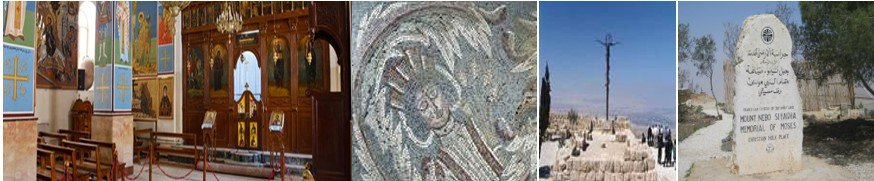
Mount Nebo - Moses Mountain, situated 10 kilometers west of Madaba, overlooking the Jordan Valley, Dead Sea, West Bank and Jerusalem, where believed the alleged sites of the tomb of Moses. The major highlight is the Byzantine Church built by the 4th century to memorial Prophet Moses death, and the spot where Moses views the “Land of Canaan” the Holy Land that he would not enter
Kings Highway (Mujib Valley or Arnon Valley) - Pilgrim’s way and a Trade route. It runs from Heliopolis Egypt, eastwards to the Sinai desert to Eilat and Aqaba. Northwards through the Araba, Petra, Ma’n to Udruh, Sela(Petra) and Shobak. Passing through Kerak, the land of Moab to Madaba, Amman, Jerash, Bosra in Syria to Damascus and to the upper Euphrates. The Nabataeans used this road as a trade route. During the Roman period, the King’s Highway was rebuilt by Trajan and called it the Via Traiana Nova.
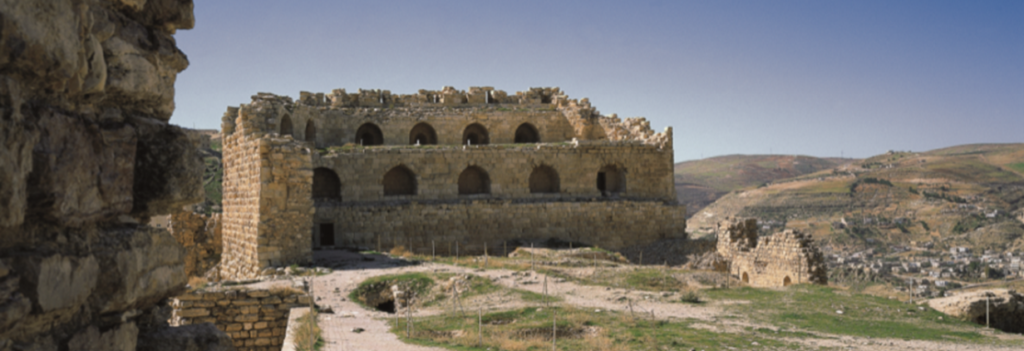
Enjoy lunch at a local restaurant then visit Kerak Castle; One of the largest crusader fortresses built in1140s under Pagan and Fulk king of Jerusalem where it was called Crac des Moabites or "Karak in Moab”. The castle surrendered in the 12th century to Saladin’s Army due to the lack of arms. Major highlight is to visit the castle as an example of Crusader architecture, a mixture of west European, Byzantine, and Arab designs, and as one of early Frankish castles.
You will be picked up from the hotel and taken to the pink city to start your Petra by Night experience.
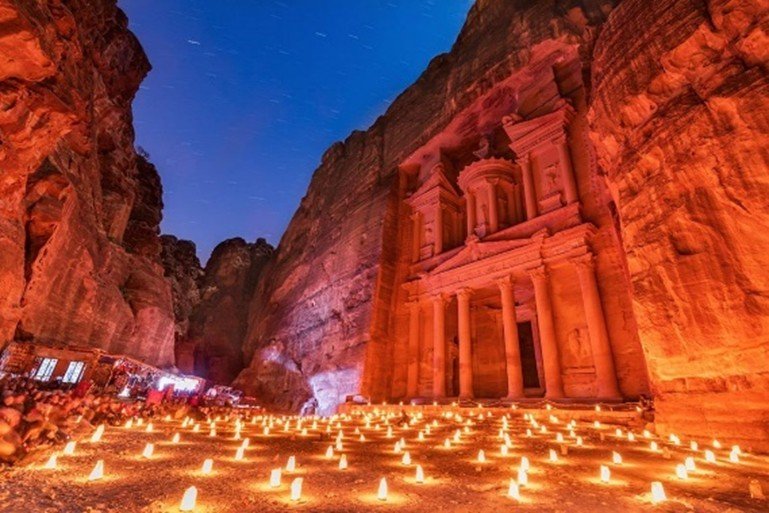
Petra by Night runs every Monday, Wednesday and Thursday of each week, starts at 20:30 from Petra Visitor Centre and delivers you back by licensed guide to the Visitor Centre around 22.30pm
This event is a magical way to see part of the rock city by candlelight and explore the old city, which has become a world wonder, incomparable experience starts by walking the entire Siq to the Treasury, lit with over 1,500 candles to bring the major attraction due to the spectacular view it has.
Dinner is included at the hotel.
Overnight at Petra Moon Luxury hotel or Similar
Meal: Breakfast, lunch & Dinner
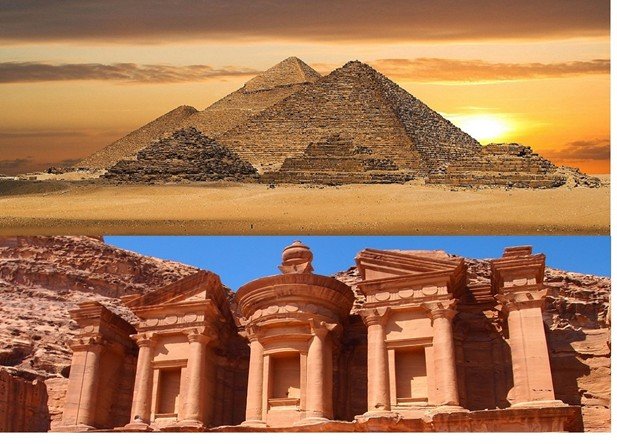
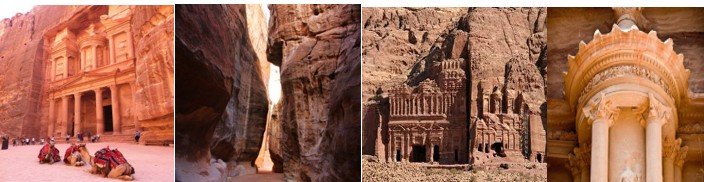
Check out of the hotel after breakfast and store your luggage. You will be taken to the visit Petra - Known as the ‘Pink-Rose City’ or the “Lost City” is one of the new Seven Wonders of the World. a breathtaking walking tour today through the ruins of ancient Petra – the city that the Nabateans carved out of solid rock dating back to 300 BC! special moments to walk through a passage the Siq, which dramatically opens up to reveal the Treasury Building (Al-Khazneh). We will see also the Roman Theatre, Corinthian tomb, Palace of Pharos’s Daughter, the Carved Roman Theater and the Royal Courts, along with one of the oldest Cathedral of the Bishop high chair.
On completion of your tour, enjoy lunch then return to the hotel pick up your luggage then continue to Wadi Rum.
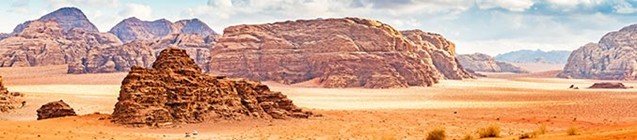
Otherwise known as Valley of the Moon, Wadi Rum is the largest - and most magnificent - of Jordan's desert landscapes and has been virtually untouched by humans. A maze of monolithic rock formations rises up from the desert floor to heights of 1,750 meters (5,740 feet), creating a natural challenge for serious mountaineers. However, Wadi Rum may be best known for its connection with British officer T. E. Lawrence, who passed through several times during the Arab Revolt of 1917–18. In the 1980s one of the rock formations in Wadi Rum was named "The Seven Pillars of Wisdom" after Lawrence's book penned in the aftermath of the war, although the 'Seven Pillars' referred to in the book have no connection with Rum.
Enjoy dinner under the stars.
Overnight: Wadi Rum Bubble Luxotel or Similar
Meal: Breakfast, lunch & Dinner
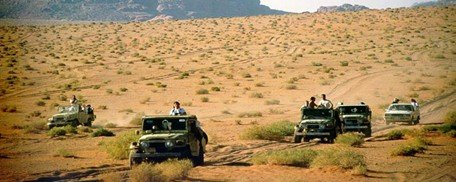
Enjoy an early morning excursion in Wadi Rum by a 4x4 vehicle for 2 hours. (Please note: The Wadi Rum 4x4 excursion is conducted on board a basic but comfortable vehicle which is operated by a local charity foundation. All tourism dollars generated through these tours helps support the livelihood of the local Bedouins).
Return to the camp for breakfast then check out. You will be driven to your hotel in the Dead Sea area.
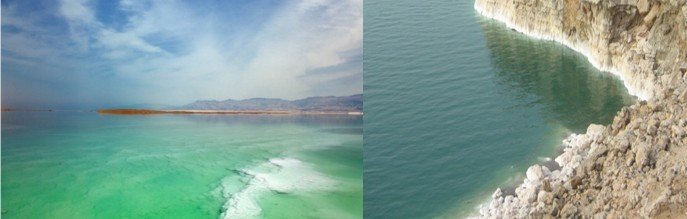
At 410m below sea level, the Dead Sea is the lowest place on earth. Jordan’s Dead Sea coast is one of the most spectacular natural and spiritual landscapes in the world, and it remains as enticing to international visitors today as it was to kings, emperors, traders, and prophets in antiquity. The main attraction of the Dead Sea is of course the soothing, abnormally salty water itself. The salt content of the water is 31.5% making the water so buoyant that it is impossible for the visitor to sink. The water also contains 21 minerals including high levels of magnesium, sodium, potassium, and bromine and 12 of these minerals are found in no other body of water in the world.
Arrive at the hotel, check in then enjoy lunch. Spend the rest of the day at leisure.
Dinner is included at the hotel.
Overnight at Dead Sea Kempinski Ishtar Hotel or Similar
Meal: Breakfast, lunch & Dinner
Enjoy breakfast at the hotel then spend the day at leisure.
Overnight at Dead Sea Kempinski Ishtar Hotel or Similar
Meal: Breakfast & Dinner
Check out of the hotel after breakfast and you are transferred to Queen Alia International Airport to check in then board the flight home (airfare is extra).
***END OF SERVICES***
Wishing you a wonderful trip in Egypt & Jordan!
Important information:
- Your passport must be valid for at least 6 months after your return.
- On arrival at each airport look for one of our representatives with a paging board with your name on it.
- You need a visa to enter Egypt. This is obtained on arrival at a cost of US $25.00 payable in cash. Amount is subject to change.
- Hotel rating is per Egyptian & Jordanian standards so could vary from North American / international rating.
- Please note that the itinerary is subject to change due to traffic conditions, weather, etc. However, the guides will always notify you of any changes.